Vin Motors · · 12 min read
Used BMW buying guide (2026): best engines, what breaks, prices
Which used BMW to buy in 2026: series-by-series advice, N47/B58/S58 engine reliability, gearbox choices, real market prices and an inspection checklist.
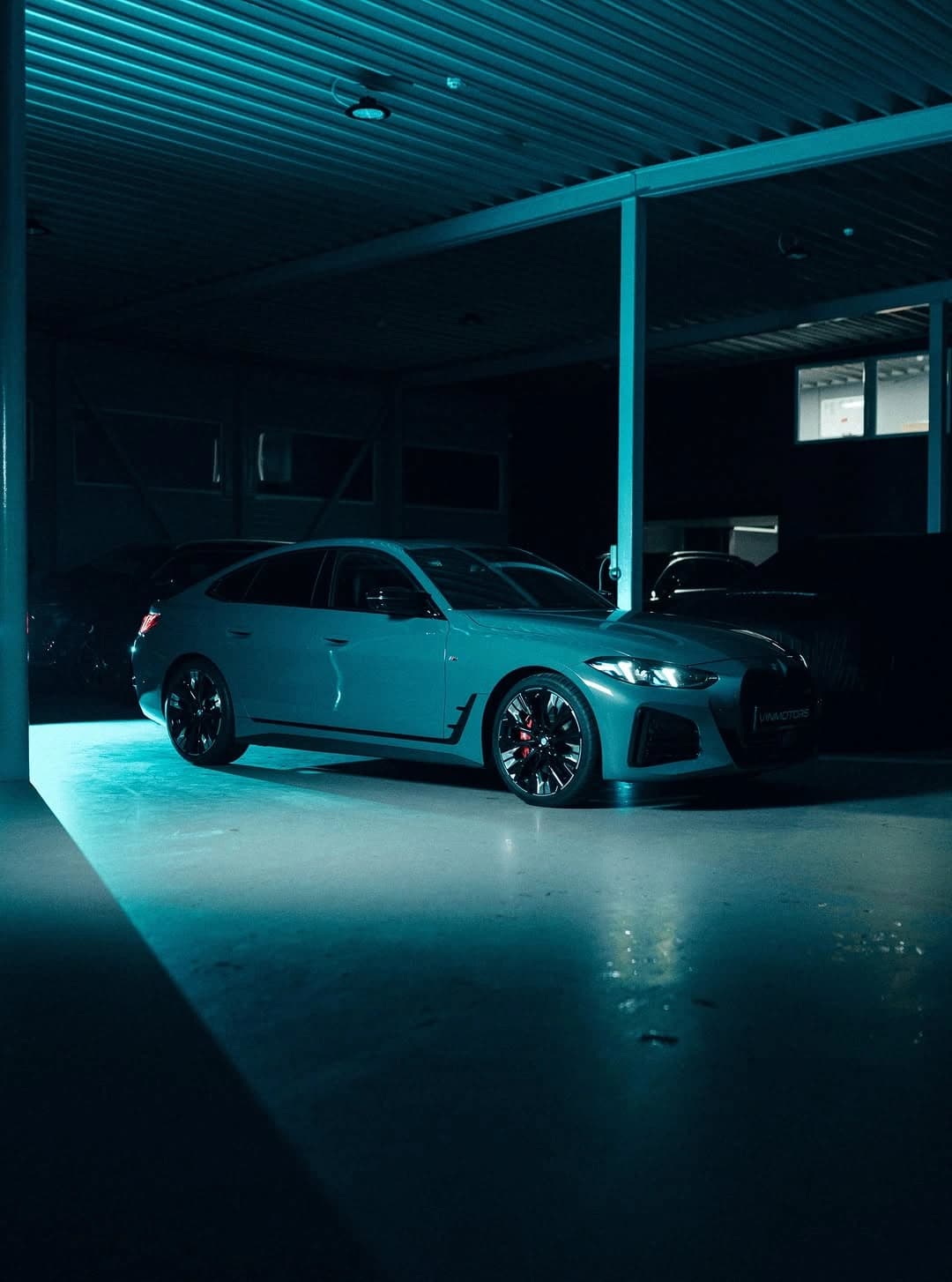
Used BMW is the most popular premium brand in the Lithuanian market. But that market spans everything from a 5,000 € 320d with 280,000 km on the clock to a 110,000 € M4 Competition fresh off a lease return. The gap between picking the right BMW and the wrong one routinely costs 10,000-15,000 € over the first 2-3 years of ownership.
This guide explains how to choose the right BMW series, which engine to pick for your use case, what common issues to check before paying, and what 2026 prices look like in Lithuania. Everything is based on our day-to-day work with the BMW inventory at Vin Motors.
Contents
- Why BMW
- Which BMW series to choose
- Engines: diesel, petrol, hybrid, electric
- What to check before buying
- Real 2026 prices in Lithuania
- Where to buy: autoplius, Germany, Vin Motors
- Vin Motors BMW inventory
- FAQ
- Ready to buy?
Why BMW
BMW is popular in Lithuania for three concrete reasons, not because of marketing.
Driving feel. BMW has stuck with rear-wheel-drive layouts on most of its core models for decades. That gives a different feel than the front-biased Audi A4/A6 or Mercedes E-Class. Even xDrive variants are built around the rear-drive base, so the chassis behaves like a sports car with extra grip, not like a traditional 4x4. Anyone who feels it once tends to come back to BMW.
Value retention. Used BMWs in Lithuania often sell for 60-70% of their original price after 3-4 years. That beats most Japanese or French brands and edges out a comparable Audi. Mercedes E-Class holds value similarly, but BMW has a more active secondary market, so cars sell faster.
M-Sport and performance heritage. Even non-M BMW models often come with the M-Sport package: stiffer suspension, larger brakes, sportier calibration, M steering wheel. That makes a standard 330i or 540d more attractive than equivalently priced competitors.
If you're weighing BMW against Mercedes and Porsche, read our comparison guide.
Which BMW series to choose
BMW makes ten different series. Each has its purpose.
1 and 2 Series. Entry-level BMW, compact, mostly front-wheel-drive in the post-2019 1 Series. The 2 Series stayed rear-wheel-drive in coupe form. Fits younger buyers or as a second household car. M240i and M2 are the smaller performance variants and represent serious value.
3 and 4 Series. The heart of BMW and the sweet spot for most buyers. In the Lithuanian market, the 320d and 330i (G20 chassis, 2019+) are the most common. The 4 Series is the same platform in coupe or Gran Coupe form. Ideal if you want classic driving dynamics without SUV bulk. The M340i (B58 engine) is a beautifully balanced performance option.
5 Series. Mid-large executive sedan. G30 chassis (2017-2023) and the newer G60 (2024+). The 520d is efficient for long distances, the 530i is balanced for mixed use, the M550i and M5 are the performance picks.
7 Series. The flagship. G11/G12 7 Series (2016-2022) are a great Lithuanian buying opportunity right now thanks to aggressive depreciation. A 740d xDrive with full options for 35,000 € is realistic. The newer G70 (2023+) with its split-screen interior is divisive, so choose based on personal taste.
X1, X3, X5, X7. SUV line from compact to full-size. The X3 (G01, 2018+) is a family all-rounder, well-suited to city use. X5 (G05, 2019+) is one of the most popular SUVs in Lithuania, especially in 30d and 40d trim. Our X5 inventory reflects that demand. X7 (G07, 2019+) is the 7-seat flagship; in the full-size SUV category it competes with Mercedes GLS and Range Rover. The X3 range lives here.
M Series (M3, M4, M5, M8). Performance twins of the standard models. M3 Competition (G80, 2021+) and M4 Competition (G82, 2021+) use the S58 engine: 510 hp, virtually bulletproof reliability compared to the older S55. M5 (F90, 2018-2023) is the 600 hp executive bomb. M8 and M850i cover the four-door coupe and Gran Coupe variants. The entire M line is more expensive to run, but holds value exceptionally well.
i Series (i4, iX, i7). Fully electric. iX1 and iX3 are the SUV variants. The i4 is the electric equivalent of the 4 Series. The iX and i7 are flagships. Battery health and thermal management history are critical factors when buying used electric BMWs. More on that in the inspection section.
Engines: diesel, petrol, hybrid, electric
Engine choice affects running costs more than the series itself does.
Diesel (320d, 520d, 530d, X5 30d). Best for high-mileage drivers: more than 25,000 km a year, mostly motorway. The B47 and B57 engines (2014+) are reliable when serviced correctly. Average consumption: 320d around 5.5 l/100 km, X5 30d around 7-8 l/100 km. A caveat: after 2024, Vilnius may apply low-emission zone restrictions to Euro 5 and older diesels. Newer Euro 6d cars are not affected.
Petrol (330i, 530i, X5 40i). Fits mixed use: city plus weekend trips. The B48 (2.0L) and B58 (3.0L) engines are modern and reliable. B58 stands out - the same engine powers the Toyota Supra MK5, M340i, and Z4 M40i. A 330i runs 7-8 l/100 km mixed, an X5 40i 9-11 l/100 km.
M performance (S58, S63). M3, M4, M5 require premium 98+ petrol, consume 12-18 l/100 km, and chew through tires every 15,000-20,000 km. A brake disc set on an M5 is 1,800-2,800 €. If you can't comfortably absorb that, the M line is premature for you.
Plug-in hybrid (330e, X5 45e). Ideal if most of your trips are under 50 km and you can charge at home. Electric-only range 50-80 km. Without consistent charging they become an expensive petrol car with extra weight. Secondary-market interest drops sharply once the battery is over 5 years old.
Fully electric (i4, iX, iX3). Fits urban and regional driving with charging access. Real winter range is 60-70% of the WLTP figure. Battery health is the critical factor - a 4-5-year-old BMW EV may already have 200,000+ km on it with reduced capacity. Always request a state-of-health report.
What to check before buying
Every BMW engine and chassis has its known weak points. Here are the most important checks by model.
N47 diesel (2007-2015 320d, 520d, X3 18d/20d) - timing chain. A well-known defect: the engine timing chain can fail, leading to a 4,000-7,000 € rebuild. BMW improved the parts from October 2011 onwards. Check by listening to a cold start - a rattling sound for the first 5-10 seconds means the chain is already stretched. Pre-2011 N47 cars are best avoided unless the price is very attractive and you can verify the chain has been replaced.
N54 and N55 (335i, 535i, F30 active hybrid). Known issues: high-pressure fuel pump (HPFP), injectors, charge pipe. The good news is everything is well-documented, parts are available, and specialists are common. Ask whether the HPFP has been replaced (BMW extended coverage to 120,000 km on many of these). Check for fuel smell in the engine bay.
S55 (F80 M3, F82 M4, 2014-2020) - reliable. Essentially bulletproof when serviced. The main risk is badly tuned cars (chip tunes without proper PCV upgrades). Ask for tuning history and inspect the ECU if you can.
S58 (G80 M3, G82 M4, 2021+). The newest M generation. No major reliability issues reported so far. Standard checks apply: service history, no serious ECU faults, healthy tires and brakes.
B58 (M340i, M540i, Z4 M40i, X3 M40i). A modern 3.0L straight-six. Reliable. Worth checking: oil-change interval (BMW says 15,000-20,000 km but 10,000 km is safer in real-world use), carbon buildup on the intake (can be cleaned).
Air suspension (X5, X7, 7 Series, 6 Series GT). Air bags wear out after 7-10 years. Replacement costs 800-1,600 € per axle. Look at the car after it has been parked overnight - if one corner sits lower than the others, a bag is leaking.
ZF 8HP transmission. BMW officially calls it "lifetime sealed." It isn't. Fluid and filter need replacing every 80,000-100,000 km. Service costs 350-600 €. Ask whether a transmission service has been done. If the car has over 100,000 km and the fluid has never been changed, either negotiate the price or budget to do it in the first six months.
Run-flat tires. Standard on most BMWs. They give you 80-150 km of run-on after a puncture, but you'll feel more road noise and harshness, and they cost 30-40% more than conventional tires. Many buyers switch back to regular tires - budget 600-1,200 € for a full set.
Battery health on electric BMWs (i4, iX). Insist on BMW's official state-of-health (SOH) report. A 4-year-old EV should show 85-90% SOH. Below 80% means the price needs to reflect it. Battery replacement is only available through BMW dealerships and costs 12,000-25,000 € depending on the model.
Real 2026 prices in Lithuania
These are general market ranges in Lithuania at the start of 2026 - not Vin Motors stock pricing.
| Model | Generation / years | Price range |
|---|---|---|
| 3 Series (Sedan / Touring) | G20, 2019+ | 25,000-45,000 € |
| 4 Series Gran Coupe | G26, 2021+ | 38,000-65,000 € |
| 5 Series | G30, 2017-2023 | 28,000-55,000 € |
| 7 Series | G11/G12, 2016-2022 | 30,000-60,000 € |
| X3 | G01, 2018+ | 30,000-55,000 € |
| X5 | G05, 2019+ | 50,000-95,000 € |
| X7 | G07, 2019+ | 65,000-110,000 € |
| M3 Competition | G80, 2021+ | 75,000-110,000 € |
| M4 Competition | G82, 2021+ | 80,000-115,000 € |
| M5 | F90, 2018-2023 | 70,000-90,000 € |
| M8 / M8 Gran Coupe | F92/F93, 2019+ | 60,000-110,000 € |
Ranges reflect mileage, trim, and overall condition. A 2019 X5 30d with 180,000 km will sit at the bottom of the 50,000 € band; a 2023 X5 with M Sport package and 35,000 km will be near 95,000 €.
Prices well below these ranges usually mean: high mileage, accident-repaired car, missing service history, or imported from the UK (right-hand drive, undesirable in Lithuania).
Where to buy: autoplius, Germany, Vin Motors
Three main ways to buy a used BMW in Lithuania, each with its own trade-offs.
autoplius.lt / private Lithuanian seller. Cheapest entry point. But no warranty, no service inspection, and all paperwork is on you. If the car has hidden issues, there's no recourse. Fits if you or someone you trust is an experienced mechanic who can inspect the car personally.
Importing from Germany yourself. Best price, but 2-3 weeks of work, German-language requirements, and complex paperwork. We cover this in detail in our import guide. Fits if you have experience or time to invest in the process.
Vin Motors. Our BMW inventory is pre-inspected, fully documented under Lithuanian law, comes with financing options, and a drive-in service for trading in your current car. Plus, our import service brings in specific BMWs on request if what you want isn't in stock. Fits if you value time and a smooth ownership transition over absolute lowest price.
Vin Motors BMW inventory
Our BMW inventory rotates regularly - most cars arrive from Germany with full service history and original trim.
Family SUVs: X5 is our most popular BMW model, usually in 30d or 40i trim with M Sport package. X3 is the smaller family pick, more efficient than the X5. X7 is the 7-seat flagship for buyers who need a full-size SUV.
Performance and M: M3 and M4 Competition models with the S58 engine, often in Competition or CSL spec. M5 F90 generation 600 hp sedans. M850i and M8 Gran Coupe variants - excellent flagship options.
4 Series and special models: 4 Series Gran Coupe variants including M Sport packages, plus less common 4 Series convertibles.
Every BMW we sell comes with a Lithuanian VAT invoice, the original KFZ-Brief (when imported from Germany), full service history when available, and a current technical inspection.
FAQ
How long does a BMW last?
A well-maintained BMW easily reaches 300,000-400,000 km. M3/M4 cars often hit 200,000+ km if not driven to extremes. The key is sticking to service intervals and not skipping oil or transmission service.
Diesel or petrol - which is better?
Depends on your annual mileage. More than 25,000 km a year, mostly motorway: diesel is more economical. Less than 20,000 km a year, mostly urban: petrol is simpler and a better match. Plug-in hybrid is only worth it if you charge at home.
Should I worry about the N47 diesel timing chain?
Pre-2011 N47 - avoid unless the chain replacement is documented. 2011-2015 models use an improved chain; risk is much lower, but still worth checking with a cold-start sound test.
Germany or UK BMW - which is better?
German cars come with full service books, left-hand drive, and EU-internal trade (no customs). UK cars are right-hand drive, unsuitable for Lithuania, and often have documentation gaps. Germany is almost always the better choice.
Is the M line more expensive to run?
Yes, significantly - tires, brakes, premium 98+ petrol and insurance all cost more; for a model-by-model breakdown, see our BMW M series guide.
Are run-flat tires worth keeping?
If you value comfort over emergency mobility, switch to conventional tires. Run-flats give you 80-150 km after a puncture but cost 30-40% more and transmit more road noise. Newer BMWs with mobile connectivity can summon help even without run-flats.
What does standard BMW service cost?
Minor service (oil, filters): 400-700 € at an authorized dealer, 250-450 € at an independent. Major service (oil, filters, plugs, fluids, brake check): 1,000-1,800 € at an authorized dealer, 600-1,100 € independent. M cars are roughly 30-50% more due to specialized parts and labor.
Ready to buy?
If you're considering a used BMW, browse our current BMW inventory or send us an inquiry. We can help you find a specific model, arrange import from Germany, or appraise your trade-in through our drive-in service.
Questions about a specific model, price, or service history? Call +370 662 76235 - the first conversation is free.