Vin Motors · · 13 min read
Used Porsche buying guide for Lithuania: 2026
Complete guide to buying a used Porsche in Lithuania. 911, Cayenne, Macan, Panamera. Engines, common issues, real 2026 prices. Vin Motors experience.
Porsche isn't a mass-market brand in Lithuania - it's a curated inventory that demands precise choices. The gap between picking the right Porsche and the wrong one rarely measures in thousands, it measures in tens of thousands of euros. As an example: cooling pipe repair on an early Cayenne (955) runs 3,500-6,000 €. IMS bearing replacement on a 991.1 generation 911 - 2,500-4,000 € (if not already done). PDK transmission overhaul - 8,000-15,000 €.
This guide explains how to choose the right Porsche model and generation, which engine to pick, what common issues to check before paying, and what 2026 prices look like in Lithuania. Everything is based on our day-to-day work with the Porsche inventory at Vin Motors.
Contents
- Why Porsche
- Which Porsche model to choose
- Engine choices
- What to check before buying
- Real 2026 prices in Lithuania
- Where to buy: autoplius, Germany, Vin Motors
- Vin Motors Porsche inventory
- FAQ
- Ready to buy?
Why Porsche
Porsche occupies a unique position in the premium market, typically defined by three characteristics.
Engineering quality unmatched even by BMW M or Mercedes-AMG. Porsche models, especially the 911 and performance variants, are developed under Nürburgring conditions for decades on end. The PDK transmission is one of the best dual-clutch gearboxes ever built. PASM adaptive suspension is calibrated through thousands of kilometers of testing. PCCB carbon ceramic brake discs are space-grade technology. The same car that laps the Nürburgring in 7 minutes is used for daily commuting without trouble.
Value holds exceptionally well, especially the 911 and GT models. A 991.2 911 Carrera S after 4-5 years often sells for 80-85% of its original price. 992 GT3 models on the 2-3 year secondary market can cost MORE than new - a behavior almost no other performance car shows. Cayenne and Macan depreciation is more normal, but still better than comparable BMW X or Mercedes GLE competitors.
Special servicing required. This isn't a car you can hand to any mechanic. Porsche-specific tools, the PIWIS diagnostic system, special fluids - these often have to be in dealership hands or qualified independent specialists.
If you're weighing Porsche against BMW and Mercedes, read our comparison guide.
Which Porsche model to choose
The Porsche lineup has seven model lines. Here's how to map them to your needs.
911 (Carrera, Targa, Turbo, GT3). Porsche's heart and the most popular performance model in Lithuania. 991.1 (2012-2015) is the last generation with naturally-aspirated 3.4L/3.8L flat-six (Carrera/Carrera S). 991.2 (2016-2019) transitioned to 3.0L twin-turbo (every Carrera turbocharged except the GT3). 992 (2020+) is the current generation, with even more technology. Body styles: Coupe, Cabriolet, Targa. Sub-families: Carrera (standard), Turbo (performance), GT3 (track-focused), GT3 RS (street-legal track day), Targa (elegant open-top with distinctive glass arch).
718 Cayman and Boxster. Smaller two-seater sports option. Cayman is the coupe, Boxster the convertible. 982 generation (2016+) uses 2.0L or 2.5L turbo four-cylinder engines - a controversial switch from the previous flat-six (969 and 987). Fits buyers who want "true sports car" feel without 911 pricing. We see fewer at Vin Motors, but occasional 718s come through.
Macan. Our most popular Porsche model for families. 95B generation (2014-2021) and 95B.2 facelift (2019+ and 2024+ update). Compact premium SUV, often in S, GTS or Turbo trim. Macan S has a 3.0L turbo V6 (340 hp). Macan GTS - 380 hp. Macan Turbo - 440 hp. Macan EV - 2024+ fully electric variant. Fits families who want Porsche luxury with practicality.
Cayenne and Cayenne Coupe. Full-size premium SUV. 9YA generation (2018-2023) and 9YA.2 facelift (2024+). Variants: Cayenne, Cayenne S, Cayenne Turbo, Cayenne GTS, Cayenne Turbo GT. Cayenne Coupe is the same chassis with a sloped roofline. 958 (2010-2017) is the previous generation, often available at 25,000-50,000 €. The early 955/957 generations are best avoided due to cooling pipe issues.
Panamera. Sporty four-door sedan (or Sport Turismo estate). 971 generation (2017-2023) and 972 (2024+). Variants: Panamera, Panamera 4, Panamera S, Panamera GTS, Panamera Turbo, Panamera Turbo S E-Hybrid. Fits buyers wanting sporty driving with four-door practicality - not your typical executive sedan segment, but a genuinely unique offering.
Taycan. Fully electric flagship. J1 platform (2019+). Variants: Taycan, Taycan 4S, Taycan GTS, Taycan Turbo, Taycan Turbo S. Sport Turismo and Cross Turismo are the wagon body styles. Battery state-of-health verification is critical. Taycan Turbo S with 800V architecture is one of the fastest EVs in the world, but ownership demands specific expertise.
Cayenne EV (2026+). The newest Porsche model, only now reaching the secondary market. Will be a significant segment in coming years.
Engine choices
Porsche engine naming is confusing - you need to know the actual technical variants.
Flat-six naturally aspirated (911 Carrera, pre-991.2). Through 991.1 (2012-2015) - naturally aspirated 3.4L (350 hp Carrera) and 3.8L (400 hp Carrera S). This is the last era without forced induction. The engine note and throttle response are pure, often valued more highly than the newer turbo versions. Reliability is good when serviced.
Flat-six twin-turbo (991.2 and 992 Carrera). 3.0L twin-turbo flat-six (370-450 hp depending on variant). More torque, lower fuel consumption, but the soundtrack is more "technical" than "musical."
Turbo (911 Turbo, Turbo S). 3.7L twin-turbo flat-six. 580-650 hp. Turbo S is Porsche's flagship performance. 0-100 km/h in 2.5-2.7 sec. Many buyers move from Carrera to Turbo after 3-4 years when they realize the standard Carrera "isn't enough." Consumption: 13-16 l/100 km, premium 98+ petrol.
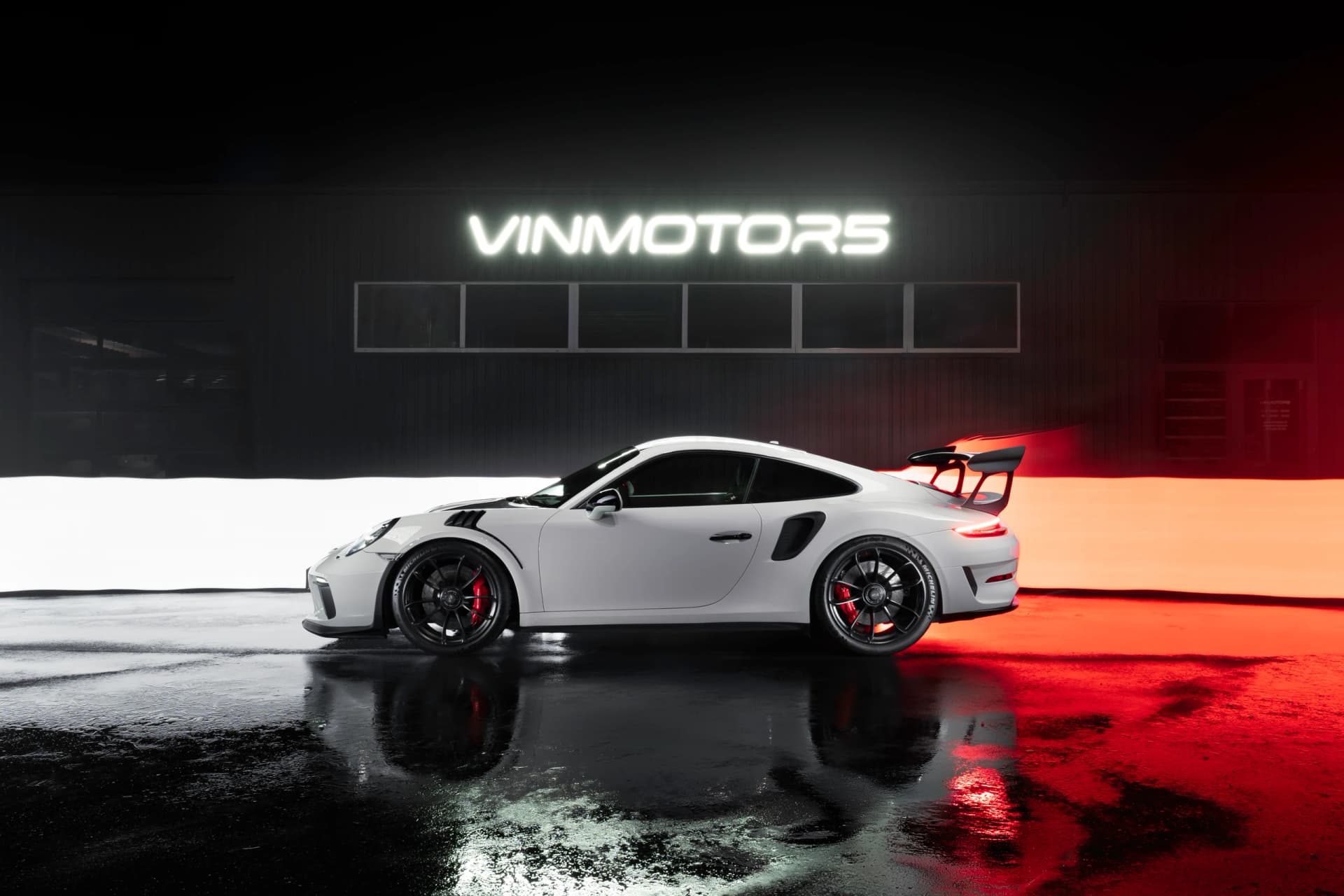
GT (GT3, GT3 RS, GT4). 4.0L naturally aspirated flat-six. 500-525 hp, revving to 9000 rpm (8500 on the 992 GT3). For purists - the best sports engines on the market today. The 718 GT4 has a 4.0L flat-six (similar to earlier 911 engines). These cars are investments - value holds or appreciates, but daily driving is uncomfortable (loud brakes, stiff suspension).
V6 twin-turbo (Cayenne, Macan, Panamera). 3.0L twin-turbo V6 (340-365 hp) or 2.9L twin-turbo V6 (440 hp for higher S/GTS variants). Audi-derived engines (post-platform sharing) but Porsche-calibrated. Reliability is good, especially the newer generation (post-2017).
V8 twin-turbo (Cayenne Turbo, Panamera Turbo). 4.0L V8 (550-680 hp). The latest engines are very reliable. Earlier V8 generations (M48 in the 968-2018 range) had timing chain tensioner problems, especially in the Cayenne Turbo 957.
Plug-in hybrids (Cayenne E-Hybrid, Panamera E-Hybrid, Cayenne Turbo S E-Hybrid). V6 or V8 + electric motor. Cayenne Turbo S E-Hybrid - 680 hp combined. Electric-only range 40-60 km. Servicing is more complex but urban consumption is dramatically lower.
Electric (Taycan, Macan EV, Cayenne EV). 800V architecture (Taycan), Premium Platform Electric (PPE). Battery is the critical factor on a used Taycan. Real winter range is 60-70% of the declared WLTP figure.
What to check before buying
Porsche has specific issues that differ from BMW or Mercedes. Here are the key inspection points.
IMS bearing (Intermediate Shaft) - 996, 997.1 911 and 987 Boxster/Cayman (1999-2008). Known for potential catastrophic failure, leading to an engine rebuild at 15,000-25,000 €. Check: ask whether IMS retrofit (LN Engineering, Pelican Parts or official Porsche) has been done. If yes - good buy. If not - high risk on these older models. 991 and 992 generations (2012+) do NOT have this issue.
Cooling pipe failures - 955 and 957 Cayenne (2003-2010). Plastic coolant pipes crack, typically around 100,000-150,000 km. Repair runs 3,500-6,000 €. Check: look for coolant leaks, residue around the engine. 958 and 9YA Cayenne (2011+) have switched to metal pipes - this issue is solved.
Bore scoring - 996 and 997 911 (1999-2008). Cylinder wall damage caused by oil-film issues. Requires an engine rebuild. Check: borescope (endoscope) inspection of cylinder walls - a Porsche specialist can do this for 100-200 €. Worth the investment if buying this generation 911.
PDK transmission service. The 7-speed dual-clutch (PDK) requires fluid change every 100,000 km. Replacement runs 800-1,500 € at an authorized dealer. Pre-2019 PDK generations may also need electronics calibration. Check: ask about interval service history, no fault codes in the car's computer.
Carbon ceramic brakes (PCCB). Identified by the yellow brake calipers. Disc replacement: 8,000-15,000 € for a full set. Check: ask how much friction material remains on the discs. Newer Porsches show PCCB wear level on the dashboard. If they're worn out, you're looking at a massive bill.
PASM adaptive suspension. Hydraulic dampers can start leaking after 6-8 years. Replacement: 1,200-2,500 € per axle. Check: look at the dampers - signs of leaking (moisture around the fittings). On test drive - feel whether the adaptive suspension reacts when you engage Sport mode.
Steering feel and mechanical steering issues. 991-generation 911s have electromechanical steering. Some buyers complain about a "dead" feel compared to earlier generations. This is character, not a defect - but on a test drive, confirm you actually feel the steering feedback.
Battery health on electrics (Taycan). Insist on the official Porsche state-of-health (SOH) report. Taycan battery replacement is 18,000-30,000 €. A 4-year-old Taycan should show 85-90% SOH. Below 80% and the price must reflect it.
Service history - critically important. A properly serviced Porsche has been touched by Porsche dealership specialists or qualified independents. Every service should be stamped in the service book or recorded digitally in the PCM system. A Porsche without service history is a risky buy.
Real 2026 prices in Lithuania
These are general market ranges in Lithuania at the start of 2026 - not Vin Motors stock pricing.
| Model | Generation / years | Price range |
|---|---|---|
| 911 Carrera / S | 991.1, 2012-2015 | 65,000-90,000 € |
| 911 Carrera / S | 991.2, 2016-2019 | 75,000-110,000 € |
| 911 Carrera / S | 992, 2020+ | 100,000-160,000 € |
| 911 Turbo / Turbo S | 991.2, 2016-2019 | 110,000-180,000 € |
| 911 Turbo S | 992, 2020+ | 180,000-280,000 € |
| 911 GT3 | 991.2, 2017-2019 | 150,000-220,000 € |
| 911 GT3 | 992, 2021+ | 220,000-320,000 € |
| Cayenne S / GTS | 9YA, 2018+ | 55,000-95,000 € |
| Cayenne Turbo | 9YA, 2018+ | 85,000-140,000 € |
| Cayenne Coupe | 9YA, 2019+ | 70,000-130,000 € |
| Macan / S | 95B, 2014-2021 | 30,000-60,000 € |
| Macan GTS / Turbo | 95B, 2016+ | 55,000-90,000 € |
| Macan (facelift) | 95B.2, 2019+ | 50,000-85,000 € |
| Panamera 4S / GTS | 971, 2017-2023 | 70,000-110,000 € |
| Panamera Turbo S | 971, 2017-2023 | 95,000-140,000 € |
| Taycan 4S | J1, 2020+ | 65,000-90,000 € |
| Taycan Turbo S | J1, 2020+ | 100,000-140,000 € |
| 718 Cayman / Boxster | 982, 2017+ | 55,000-90,000 € |
Ranges reflect mileage, trim and overall condition. A 2018 911 Carrera (991.2) with 45,000 km will sit in the bottom of the 75,000-80,000 € band; the same model with 12,000 km and Sport Chrono package nears 110,000 €.
Prices well below these ranges usually mean: high mileage (200,000+ km), accident-repaired, missing service history, or imported from the US / UK (right-hand drive). Worth examining honestly what's behind a low price.
Where to buy: autoplius, Germany, Vin Motors
Three main ways to buy a used Porsche in Lithuania.
autoplius.lt / private Lithuanian seller. Porsche selection on autoplius platforms is limited, especially for rarer models (GT3, Turbo S, Taycan). Without service history or with missing details - high risk. Porsche is particularly sensitive to incorrect servicing, so a private-seller car without Porsche dealer history deserves extreme caution.
Importing from Germany yourself. Best route for specific models and trim combinations. Detailed process in our import guide. Porsche fits this method well: most one-owner lease returns, full Porsche Center service history, rare-variant options (Speedster, GT3 Touring, RSC, etc.). But expert inspection is required - Porsche specifics demand PIWIS diagnostics.
Vin Motors. Our Porsche inventory is pre-inspected with Porsche-specific checks, with full Lithuanian documentation, financing options, and a drive-in service for trade-in. Our import service brings in specific Porsches on request with PCM verification before purchase. Fits if you value Porsche-specific know-how over absolute lowest price.
Vin Motors Porsche inventory
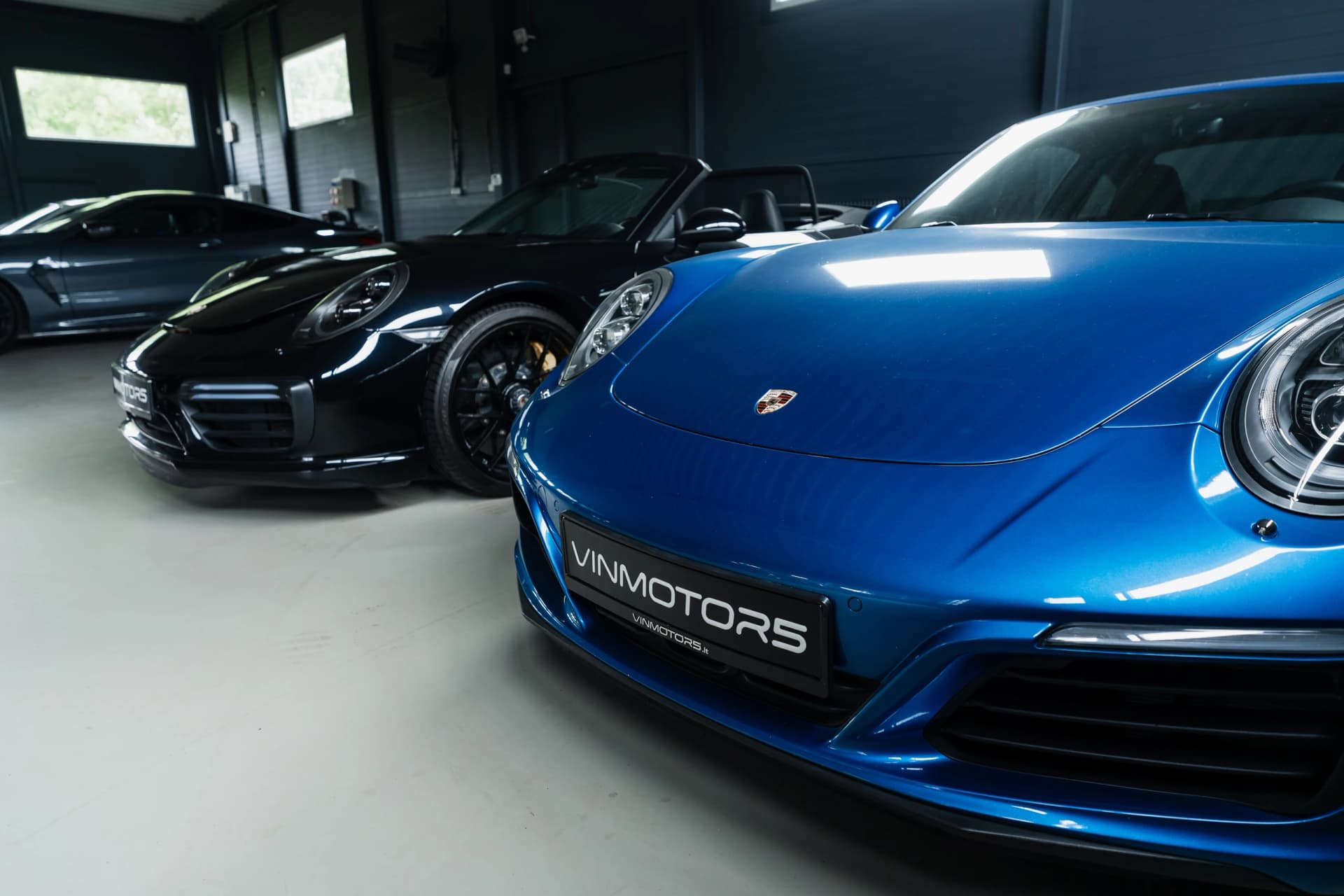
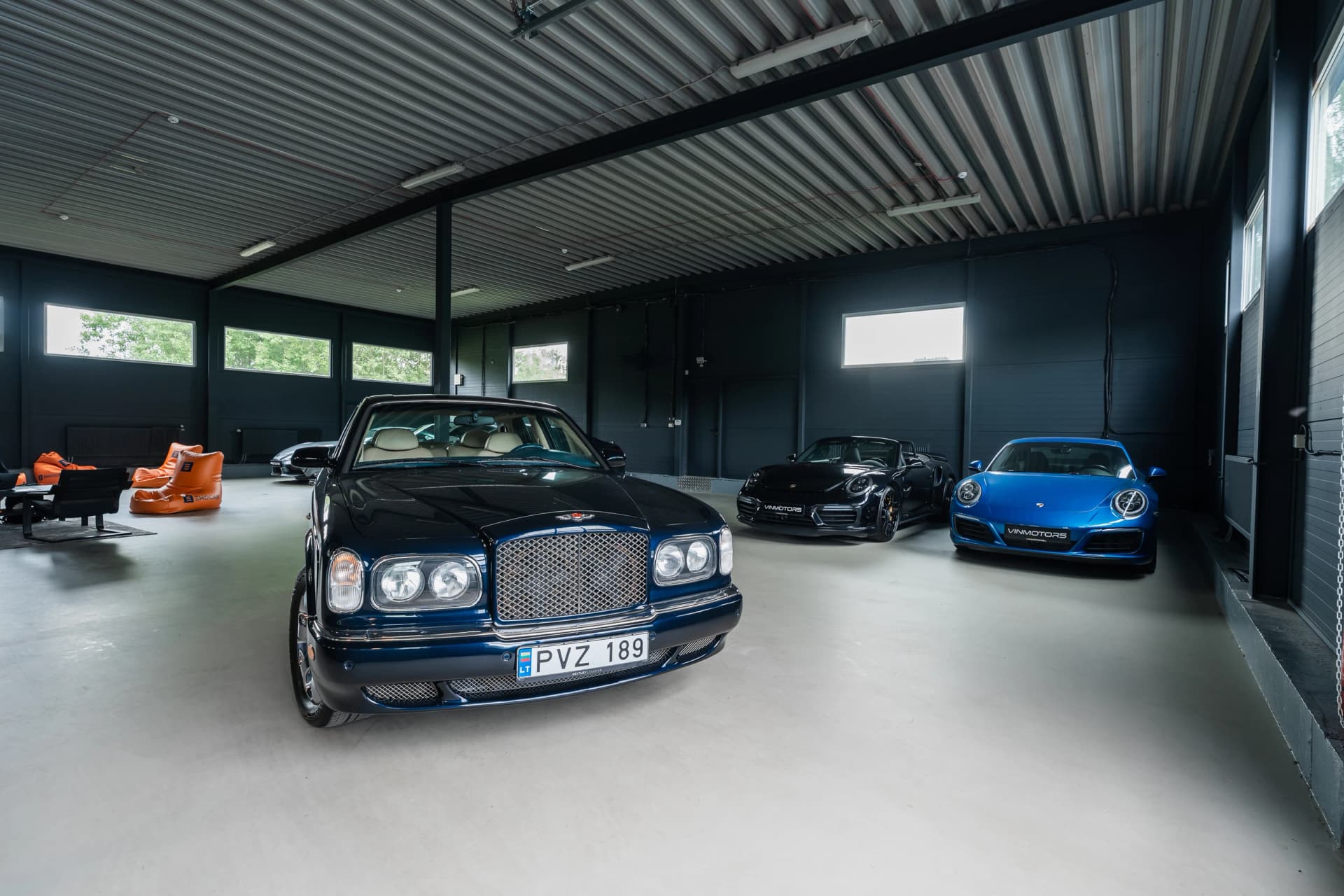
Our Porsche inventory is one of the largest premium-brand selections in Lithuania - typically 15-20 cars at any time, with full German service history and original Porsche Center spec.
Sports 911s: 911 - Carrera, Carrera S, GTS, Turbo, Turbo S variants. 991.2 and 992 generations. Often with Sport Chrono, PDLS+ headlights, PCCB brakes, solid Carrera colors or PTS Paint to Sample. GT3 and GT3 RS variants - rarer, but we see them.
Family performance: Macan - our most popular Porsche model. S, GTS and Turbo variants with sport package, panoramic sunroof, Burmester audio systems.
Premium SUV: Cayenne Coupe - GTS and Turbo variants, with crown wheels, air suspension, massaging seats. Full-size Cayenne - mostly S, GTS or Turbo variants.
4-door performance: Panamera - GTS, Turbo and E-Hybrid variants. Sport Turismo (wagon) and standard sedan. Full premium spec - Burmester High-End, Sport Chrono, ventilated seats.
Every Porsche we sell comes with a Lithuanian VAT invoice, original KFZ-Brief (when imported from Germany), full Porsche Center service history when available, and a current technical inspection.
FAQ
How long does a Porsche last?
A properly serviced Porsche easily reaches 250,000-350,000 km. 911 models with full service history and regular servicing often run with fewer problems than a comparable BMW or Mercedes. But: without regular servicing, Porsches are more expensive to fix than BMWs.
991.1 (naturally aspirated) or 991.2 (turbo) - which 911 to pick?
Depends on priorities. The 991.1 is the last naturally-aspirated generation, the purist's choice. Less torque but a higher-revving engine note, significantly better "engagement" feel. The 991.2 is faster, sportier, more efficient - but purists call it "the transition that wasn't needed." Vintage choice: 991.1. Practical choice: 991.2.
Does the Cayenne really have all the problems people talk about?
Only the early generations (955, 957 - 2003-2010) had serious cooling issues. The 958 (2011-2017) is significantly better, though still has V8 timing chain problems. 9YA (2018+) is now reliable - no major systemic issues reported today. Macan over the same period is more reliable than the early Cayenne.
Are the GT models (GT3, GT3 RS, GT4) worth it as investments?
Right now - yes. GT3 and GT3 RS hold 90-105% of their original price, especially the rarer 4.0L naturally aspirated models. A 991 GT3 RS 2015 was 200,000 € new; today it sells for 280,000-320,000 €. But these cars are uncomfortable for daily use - stiff suspension, loud brakes, exhaust noise that becomes tiring.
How much does Porsche servicing cost?
Minor service (oil, filters): 800-1,500 € at a Porsche dealership, 400-700 € at an independent Porsche specialist. Major service (oil, filters, plugs, fluids, brake check): 1,500-3,000 € at a dealership, 800-1,500 € at an independent. PDK service: 800-1,500 €. PCCB disc replacement: 8,000-15,000 € for a full set.
Is PCM (Porsche Communication Management) updatable?
Only through Porsche dealerships with the PIWIS system. Interim updates are sometimes pushed wirelessly via WLAN on post-2020 models. Pre-2018 PCM often feels dated next to Apple CarPlay / Android Auto. Retrofit kits run 500-1,200 €.
Is the Taycan a good electric to consider?
Yes, especially the Taycan 4S with the 93 kWh battery. The most sporting EV on the market - faster than a Tesla Model S Plaid in track conditions. But battery replacement risk (18,000-30,000 €) means a SOH report is absolutely mandatory when buying used. Every Taycan we sell has already been checked against the official Porsche protocol.
Ready to buy?
If you're considering a used Porsche, browse our current Porsche inventory or send us an inquiry. We can help you find a specific model, arrange import from Germany, or appraise your trade-in via our drive-in service.
Questions about a specific model, price, or service history? Call +370 662 76235 - the first conversation is free.